Transformation of Information into Form
My Cubes explore how the visual information that surrounds us can be reduced, transformed and translated into physical form.
We live in a world saturated with images, signs, symbols, codes and visual structures. They guide our perception, communicate meaning and create systems of order. My Cubes take elements from this visual environment and strip them down to their essential forms — lines, crosses, grids, fields and geometric signs.
The cube is both image and object. Its frontal surface functions as a pictorial field, while its physical depth brings the sign into real space. The slightly deformed, hand-shaped body contrasts with the precision of the marks applied to its surface, creating a tension between system and individuality, order and deviation.
I understand the individual signs not as fixed symbols with predetermined meanings, but as elements of an evolving visual language. Their meaning emerges through repetition, variation, interruption and their relationship to other forms and to the surrounding space.
This evolving language is what I call Cube Grammar.
A single Cube can function as a sign. Several Cubes become a relationship. Arranged on a wall, they form a visual syntax in which space itself becomes part of the work.
The Cubes are therefore not intended as representations of a particular reality. They are attempts to transform the overwhelming flow of contemporary visual information into something reduced, tangible and open to interpretation.
Information becomes sign.
Sign becomes form.
Form becomes space.
This is Cube Grammar.
Bio
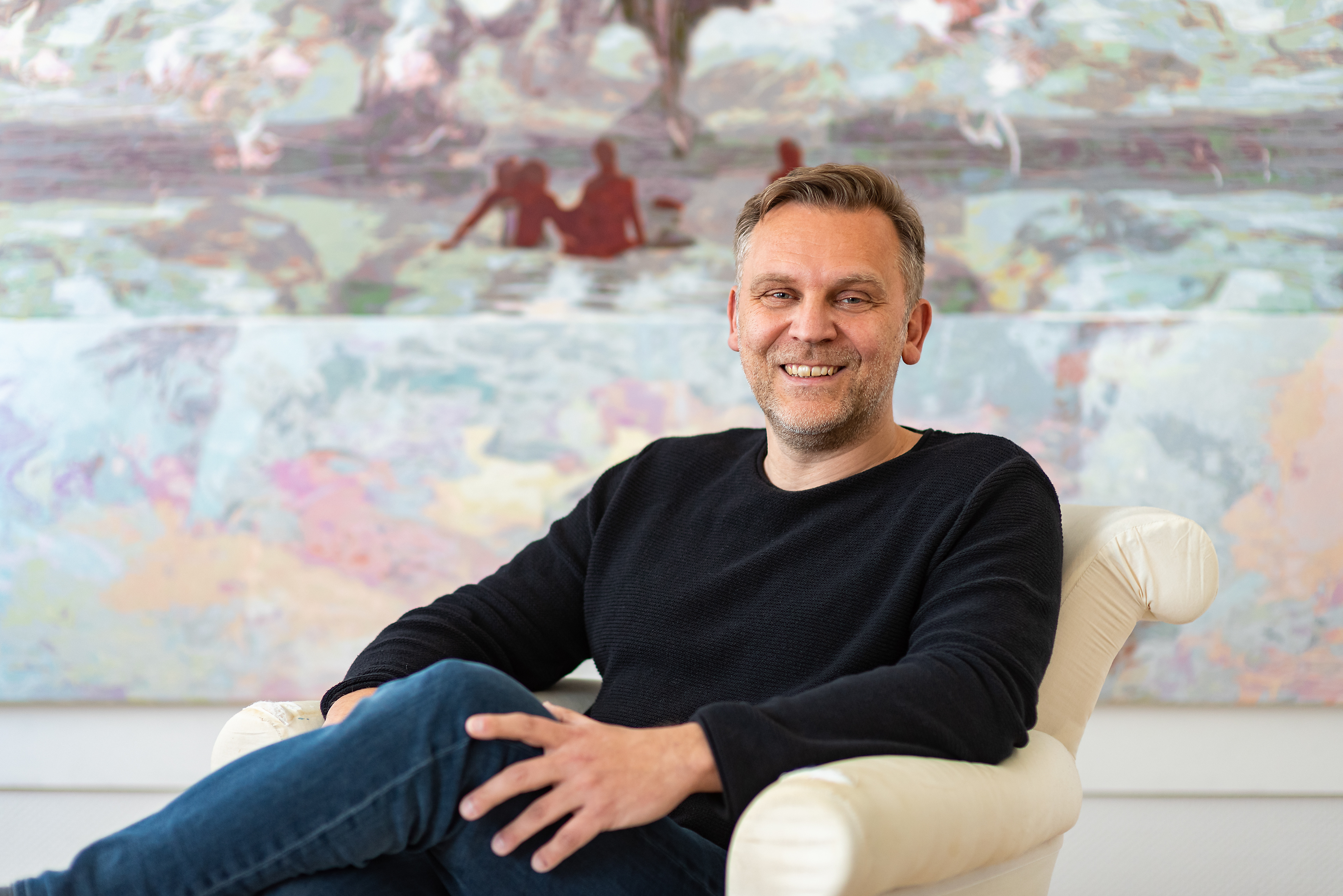
Uwe Henn is an artist working in the fields of painting and sculpture. Henn lives and works in Mainz, Germany.